Claims are won on records you kept at the time — not the ones you reconstruct later.
Stoppages you author with real stop/resume times, a crew-hours lost-time ledger over them, the contractual defects register beside them — and one click bundles any declared window into an evidence pack, frozen with a content-hash attestation.
How the day actually runs.
- The claim
A delay claim lands for March
Six months later, someone else’s letter defines the battlefield. You open the window it names — time × area × contractor — and the record for exactly that slice is already assembled.
- The window
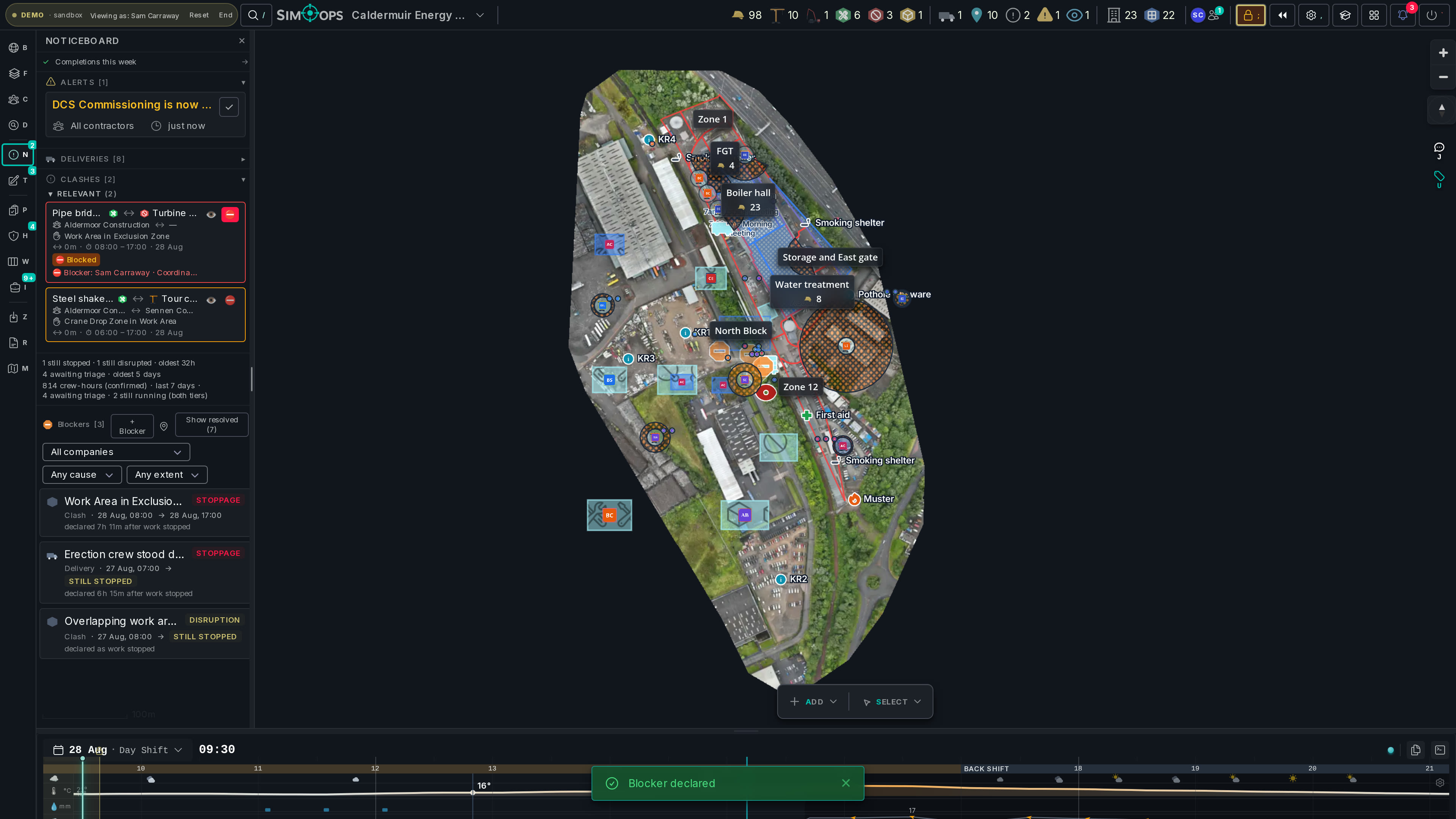
Blockers with the actual times
Each stoppage was declared when it happened: cause, affected permits, delay vs disruption, the real stop and resume times — countersigned by the other side, or formally disputed. Concurrent delay is simply visible: two windows, overlapping, on one timeline.
- The crew-hours
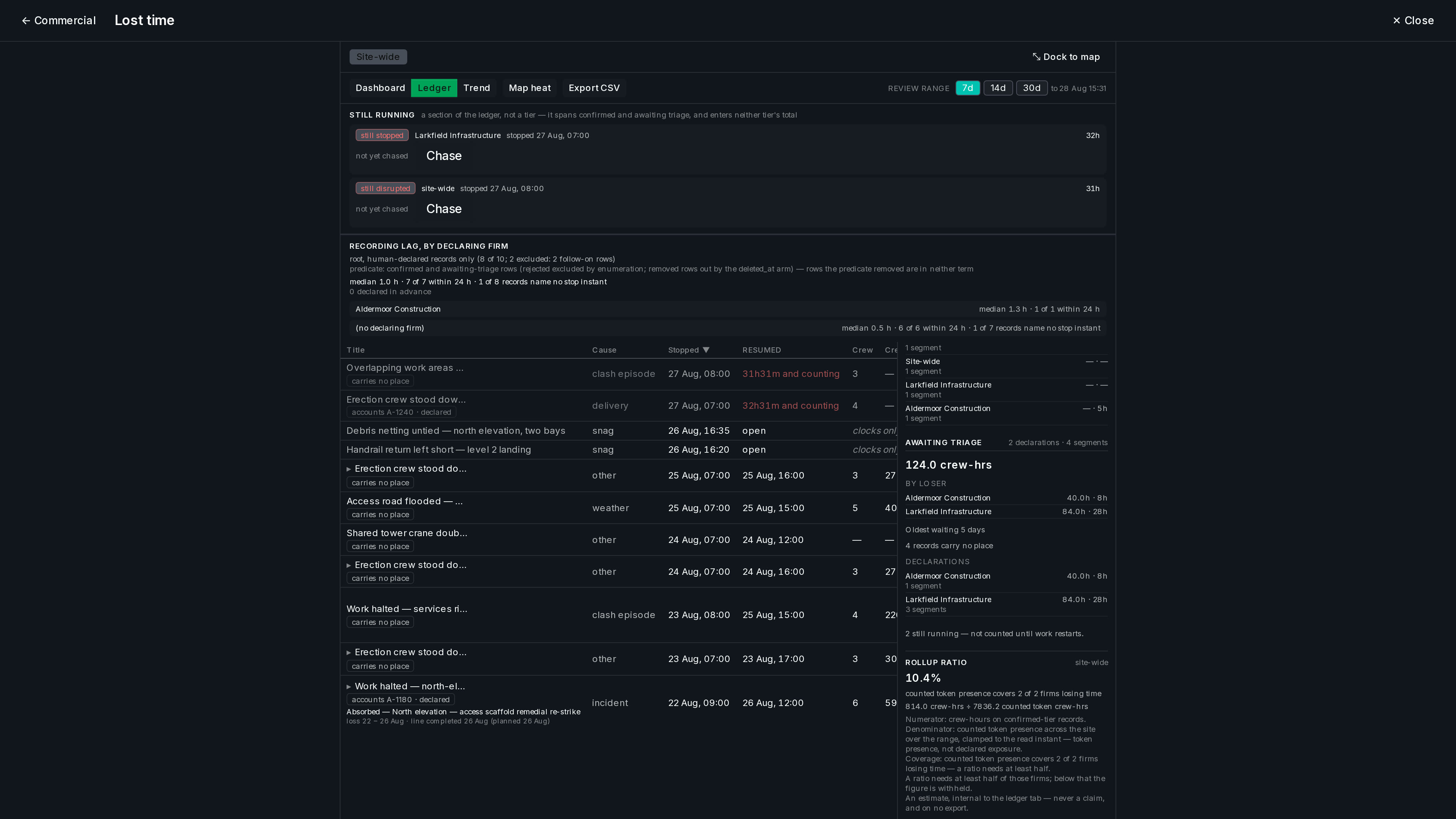
What the stoppage actually cost
Over the stoppage record sits the lost-time ledger: window × headcount, in crew-hours — your firm’s position and the site-wide picture, derived from the same countersigned windows the other side already acknowledged. The quantum argument starts from a number, not a shrug.
- The register
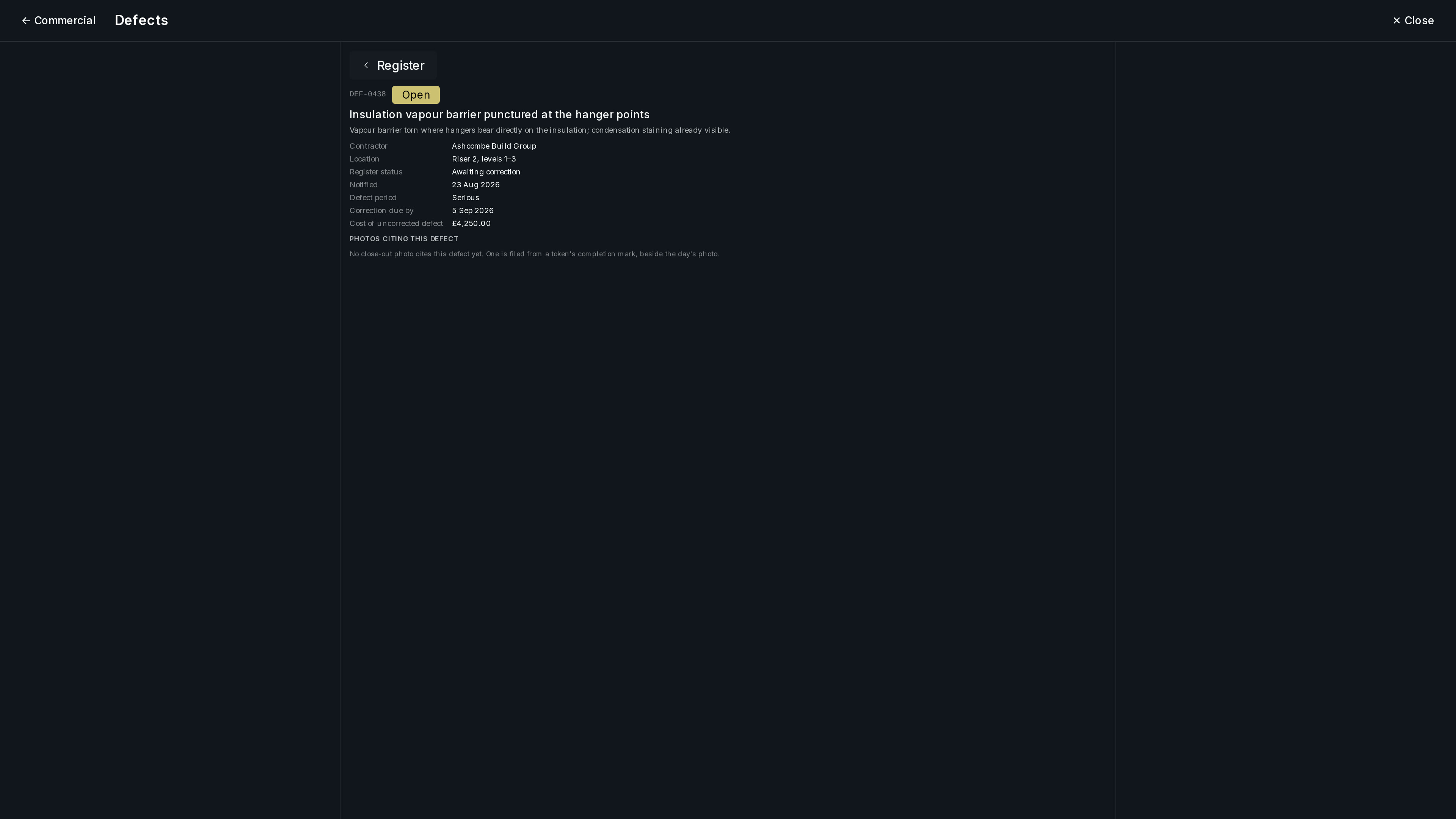
The clause-45 money, tracked
The contractual defects register imports as issued and is tracked per contractor — beside the stoppages it argues with. When the account settles, the defects and the delays are one record, not two spreadsheets in two inboxes.
- The as-of
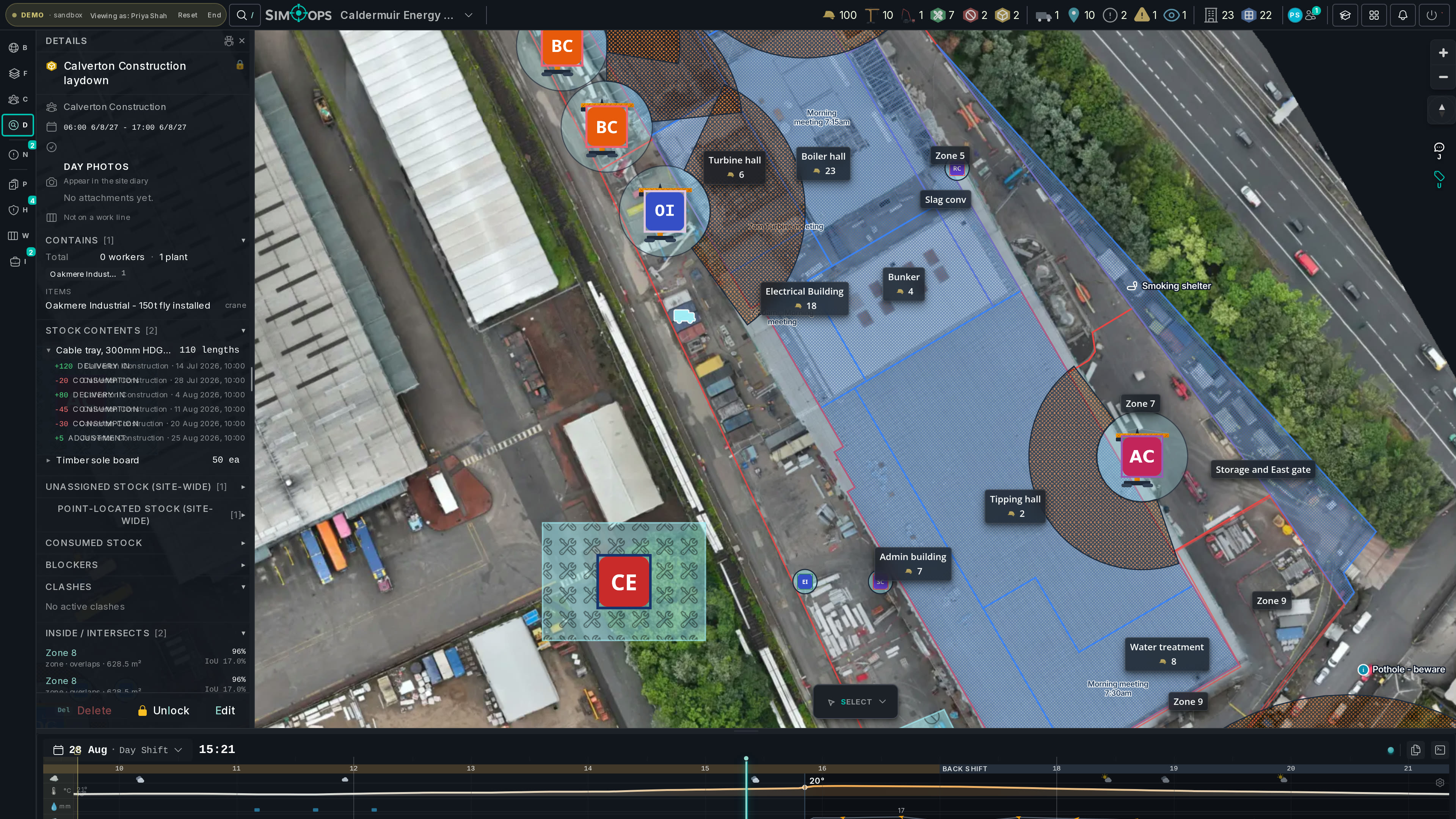
“What was in laydown B on March 3rd?”
Every stock movement is an append-only ledger entry, so the as-of question has an exact answer — the balance that day, derived from entries nobody could quietly edit afterwards.
- The pack
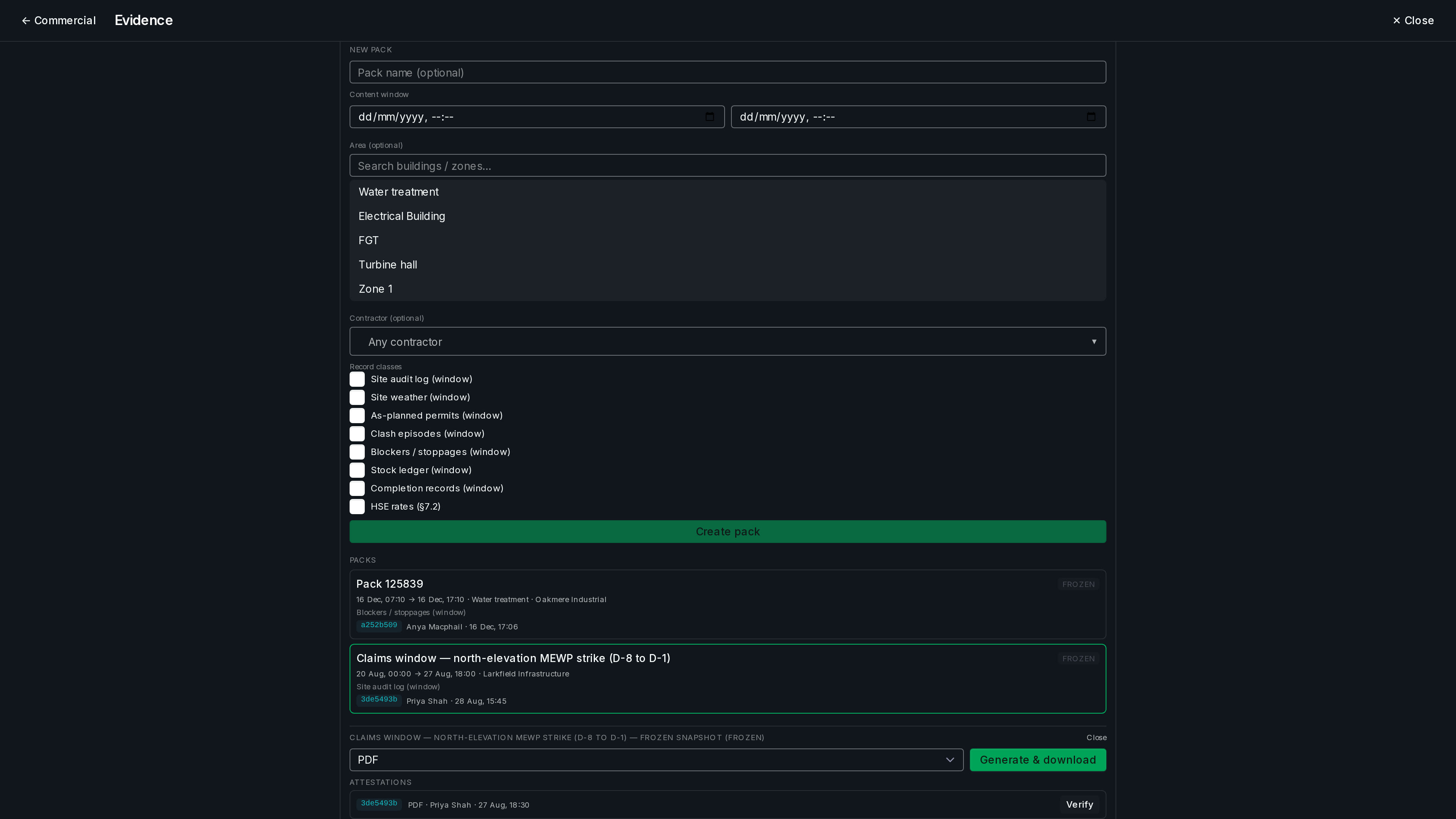
One click, one frozen bundle
The window becomes an evidence pack: a branded narrative PDF plus raw CSV and GeoJSON annexes, frozen with a content-hash attestation. “What did we hand the other side in March?” — this pack, these contents, this moment.
You've said these words before.
“We reconstruct claims across six systems, months later.”
The record was kept at the time, in one place, addressable by window — time × area × contractor — instead of excavated from emails, diaries and photos with no timestamps.
“Their lawyers call our records after-the-fact.”
Append-only entries and hash-attested packs answer the challenge structurally: the attestation proves what the bundle contained and when it was frozen.
“Concurrent delay is a shouting match.”
Overlapping blocker windows appear as overlaps on one timeline, each with its own countersignature or dispute — the argument becomes a picture.
“Delay and disruption get argued as one blob.”
Each blocker is declared as delay or disruption at the time, by the people who were there — not re-categorised to fit the claim two years on.
“Lost time is an estimate someone wrote in a meeting.”
Lost time is derived — window × headcount over the countersigned stoppage record, in crew-hours — and the exposure hours behind it are submitted and accepted four-eyes. The number has a paper trail before anyone disputes it.
“The weather data gets laughed out of the room.”
Pack weather sections label every figure as contemporaneous observation or later reanalysis — stated proudly, because honest provenance is what survives cross-examination.
A QS login that reads everything — sitewide records, evidence packs and exports — and writes exactly one thing: the stoppage record it exists to keep.
Your seat can
- Read the whole site across every contractor — live and back through time
- Author the stoppage record: declare, edit and resolve blockers — the one record this seat writes
- Read the lost-time ledger and the defects register — crew-hours and clause-45 money, side by side
- Generate evidence packs: narrative PDF, raw annexes, attestation hash
- Export the record for the claim file, with the audit view of who did what, when
Not this seat
- Move or edit any work — no entity mutation, full stop
- Touch permits, verdicts or any other workflow — beyond the stoppage record, reading never changes what it reads
The narrow write is itself a credibility feature: the record’s keeper authors one ledger, in the open, countersigned by the other side — and can alter nothing else it reads.
Start the record before the claim.
The pack you’ll need in two years is built from records kept today. Open the live demo and generate one — or bring a live dispute and we’ll show you the window.
No install · runs in the browser · scrubbed demo data