Every near miss, every finding, every fix — one loop, on the record.
Observations arrive triaged with evidence attached, inspections mint corrective actions with one accountable company, close-outs carry photos you accept or bounce — and a case only closes when the fix is actually done.
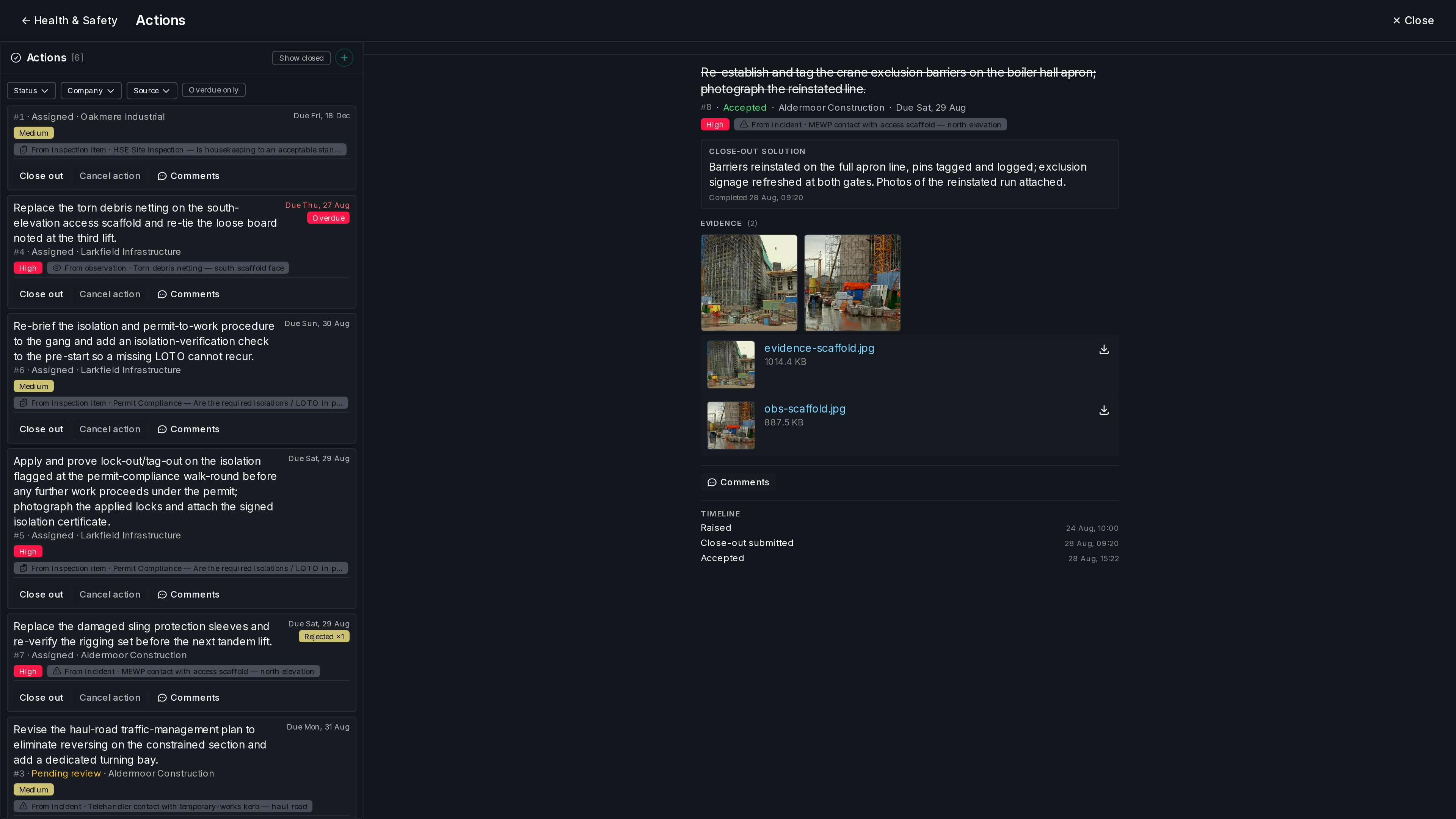
How the day actually runs.
- 07:40
Work the triage queue
The night’s observations wait with photos, tap-grid severity and location evidence — including the anonymous ones from the QR poster at the gate. You gate what the site sees; nothing surfaces until you say so.
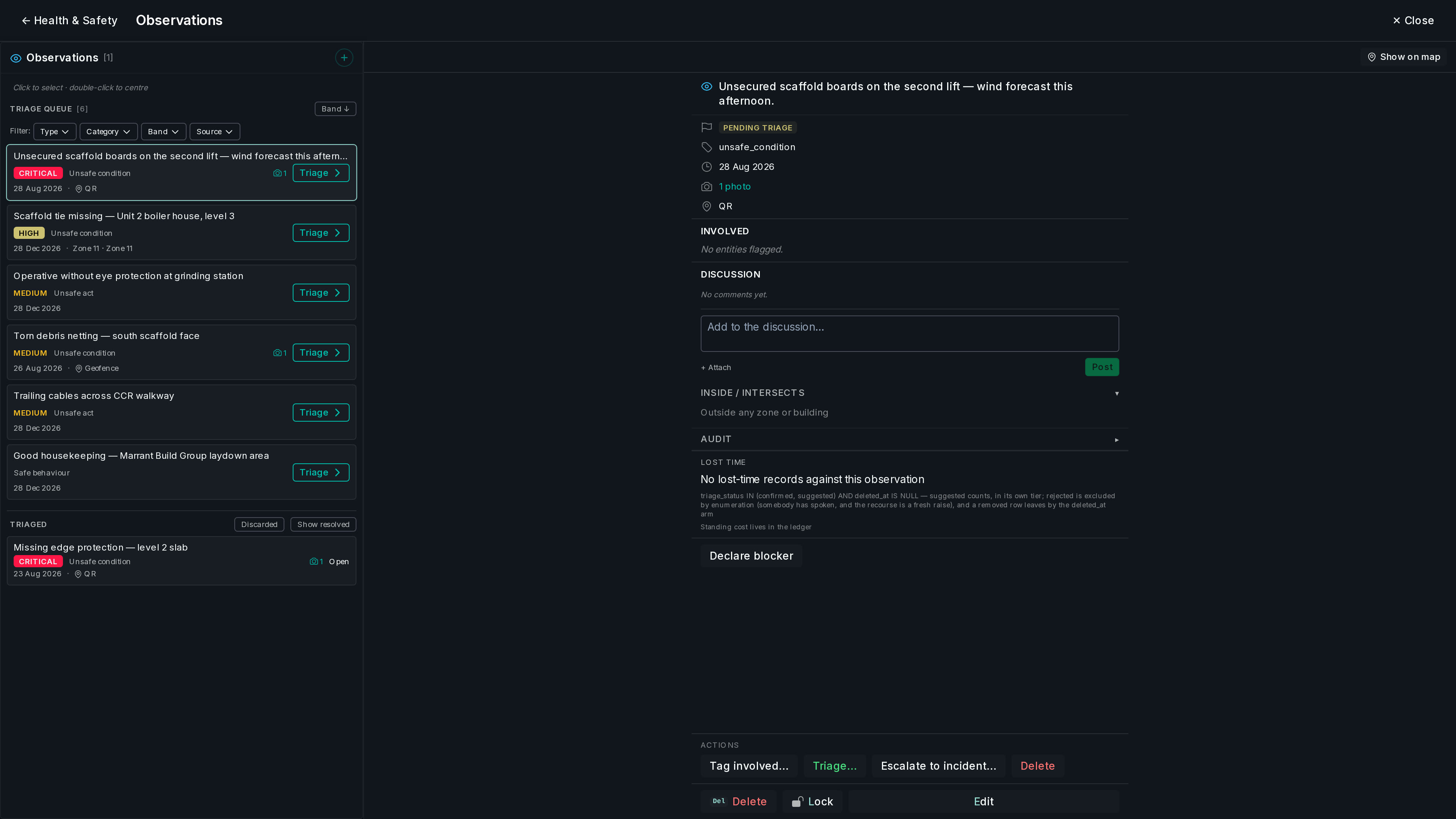
- 10:15
Run the inspection where you stand
Templated, versioned checklists on a phone or tablet — the audit you actually planned, not the one that fit in a notebook. A failed item mints a corrective Action on the spot: one accountable company, a due date, photo evidence required at close-out.
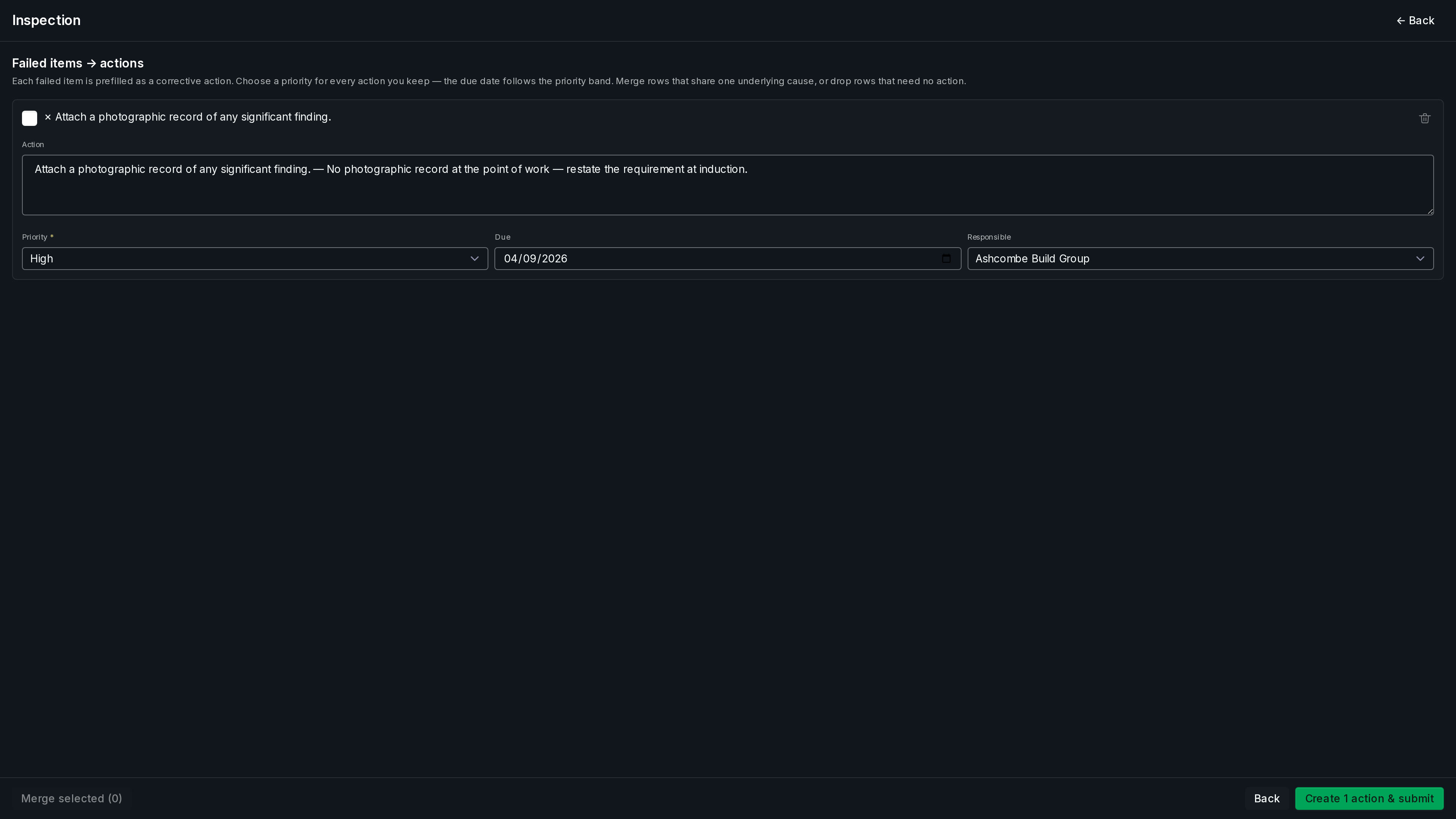
- 14:20
Bounce a thin close-out
A contractor closes an action with a photo that shows nothing. Reject it — it goes back with the rework count on the record, and the case stays open until the evidence is real.
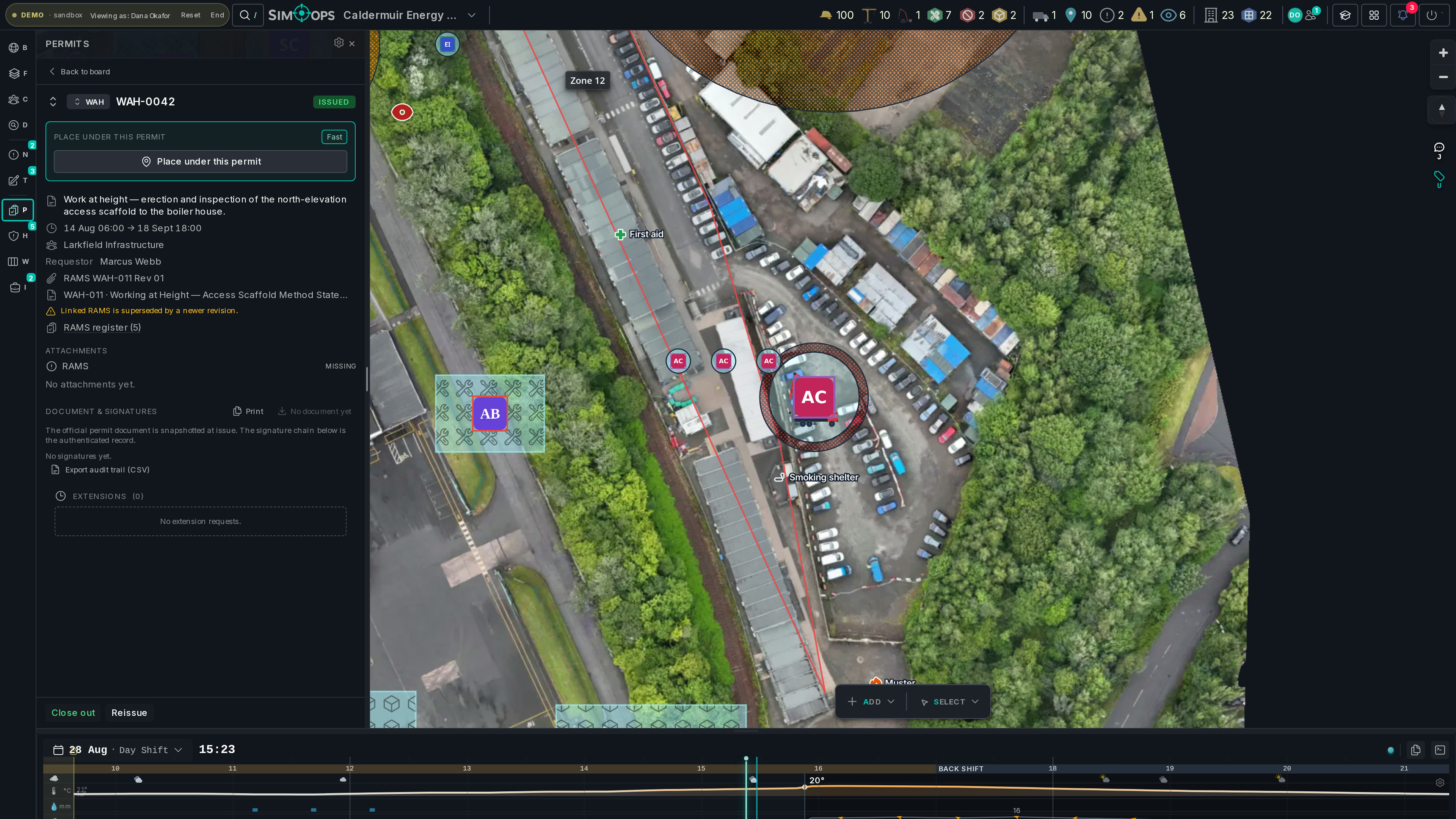
- 16:30
RAMS lanes, permits kept honest
Method statements move through your discipline review lanes. Every permit rests on the exact RAMS revision it was approved against — hash-frozen at submit — so a later upload warns instead of silently re-papering an approved permit.
You've said these words before.
“Near misses go unreported — reporting is friction.”
A QR poster or the geofenced URL takes a worker from hazard to submitted report in 30 seconds — no app, no login, no name required. The reports you never got start arriving.
“Findings die in spreadsheets.”
Every finding becomes a tracked corrective Action with one accountable company, a due date, and mandatory photo evidence at close-out. Open actions stay visibly open.
“Investigations live in Word.”
The 5×5 matrix, the chain of events, causes pinned to barrier layers, RIDDOR accounting — structured data in the record, not prose in a document nobody reopens.
“Permits get approved against superseded RAMS.”
The permit carries a hash of the exact RAMS revision it was approved on. A new upload can never silently re-paper it — the board warns, and your lanes re-review.
“Cases get box-ticked shut while the fix is outstanding.”
Closure is derived, not declared: an incident only closes when its actions are actually done, and a rejected fix reopens the case. Nobody can tick past you.
“The H&S system only works from the site office.”
The whole loop runs on a phone — triage, inspections, actions, sign-ons. The safety record is kept at the workface, where the work is, not typed up back at the cabin.
The HSE seat owns the safety record — the full health & safety write surface, deliberately minimal everywhere else.
Your seat can
- Triage observations, including anonymous QR and geofence reports
- Run investigations and sign incident verdicts
- Run inspections and accept or reject action close-outs
- Sign RAMS verdicts in the discipline review lanes, and hold both permit desk gates
- Keep the exposure record behind lost-time claims — hours accepted four-eyes, never one pair
Not this seat
- Build or export the site’s reports — coordination seats compile them, carrying your observation and incident sections
- Move other firms’ work — the operational picture belongs to the coordination seats
Deliberate separation: the H&S verdicts are yours alone, and the coordination levers are not. The person signing the safety record is never the person under schedule pressure.
A hazard report in 30 seconds. No app. No login.
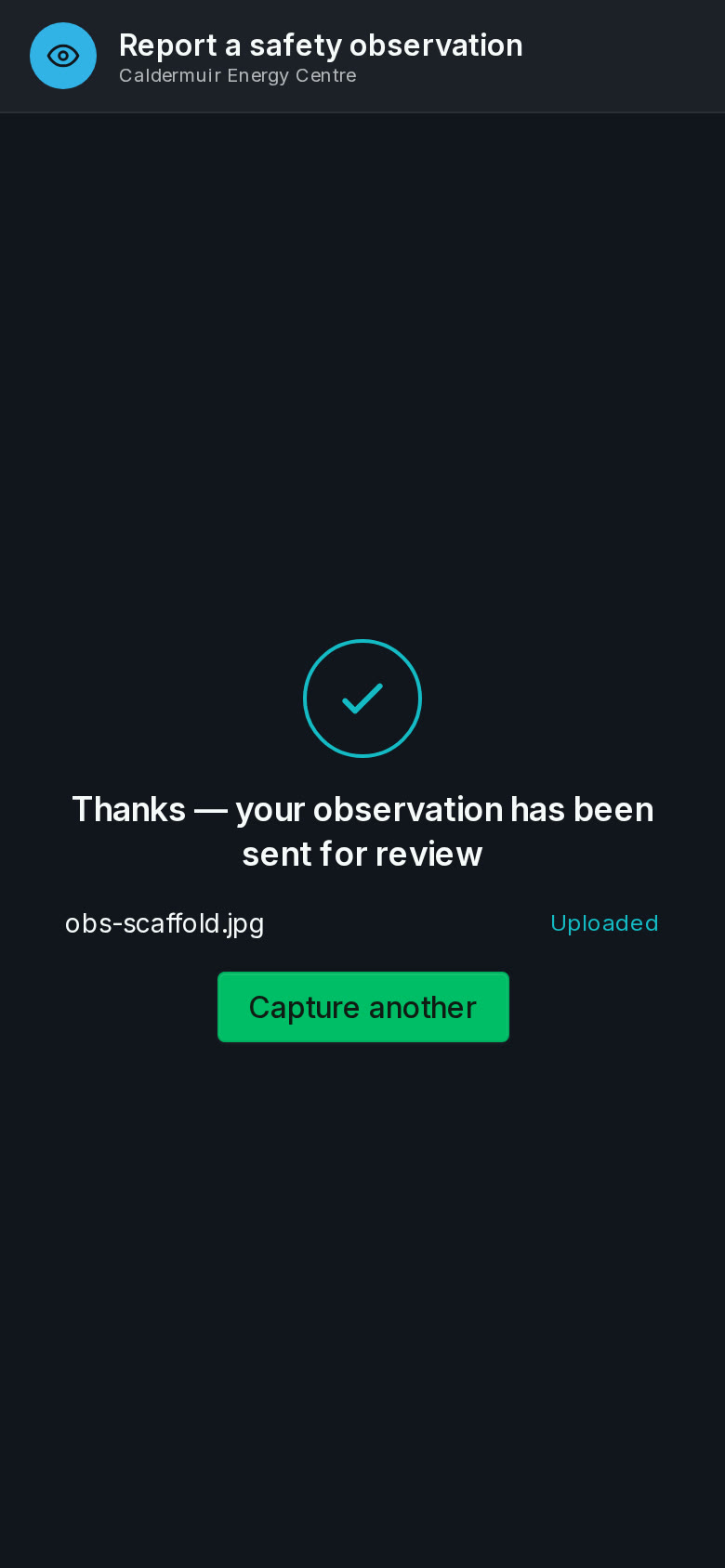
A QR poster at the gate or the site’s geofenced URL opens the form straight in the phone’s browser. Photo, a tap on the 5×5 grid, GPS location evidence — submitted before the moment passes. You triage what the site sees.
- Anonymous by default — friction and fear both removed
- Photo, tap-grid severity and GPS evidence attached at the source
- Geofence containment: the universal URL only serves on site
- Nothing reaches the noticeboard until your triage says so
Close the loop for real.
Open the live demo and reject a thin close-out yourself — or bring last month’s findings register and we’ll show you what it looks like as a loop instead of a list.
No install · runs in the browser · scrubbed demo data